

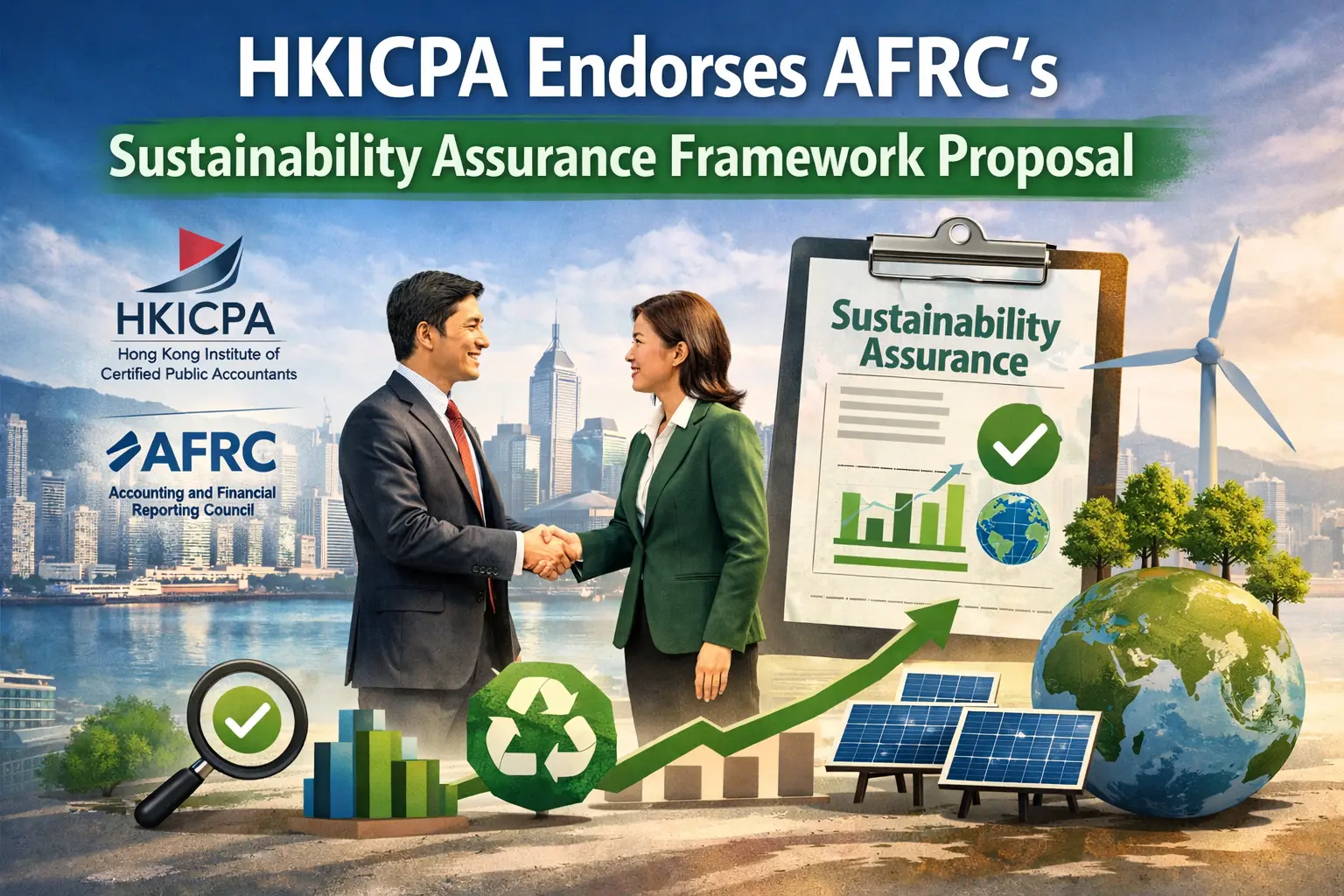
HKICPA Endorses AFRC's Sustainability Assurance Framework Proposal
The Hong Kong Institute of Certified Public Accountants (HKICPA) has publicly backed the Accounting and Financial Reporting Council's (AFRC) proposed framework for sustainability assurance in Hong Kong. This initiative aims to bolster the credibility of sustainability disclosures through adherence to international standards and consistent rules for assurance providers. Key proposals include mandatory independent assurance for HKFRS Sustainability Disclosure Standards, a phased introduction of limited assurance, and the registration of qualified assurance providers. The HKICPA views this as a crucial step in strengthening Hong Kong's position as an international financial hub aligned with global ESG practices.
Strengthening Sustainability Reporting Standards
The global landscape of corporate reporting is undergoing a profound transformation, with an accelerating focus on environmental, social, and governance (ESG) disclosures. As stakeholders, including investors, regulators, and the public, increasingly demand transparent and reliable information on a company's sustainability performance, the need for robust sustainability reporting frameworks has become paramount. Historically, a lack of standardized reporting and ESG disclosures often led to concerns about data integrity and comparability, undermining the very purpose of transparency.
The Accounting and Financial Reporting Council's (AFRC) recent framework proposal in Hong Kong directly addresses these concerns. Its core objective is to significantly enhance the credibility of sustainability data through the adoption of rigorous international standards and the establishment of consistent rules for all assurance providers. This proactive stance by the AFRC is a strategic move to position Hong Kong as a competitive and trusted financial centre in the rapidly evolving global sustainable finance arena.
The framework's commitment to aligning with global benchmarks, such as the IFRS Sustainability Disclosure Standards and the imminent HKFRS Sustainability Disclosure Standards, is crucial. This alignment fosters greater corporate transparency, which in turn can bolster investor confidence, mitigate the risks of 'greenwashing,' and attract more responsible capital flows into Hong Kong's markets. The integration of globally recognized standards ensures that local disclosures are understandable and comparable on an international scale, which is vital for Hong Kong's global standing.
However, the implementation of such a comprehensive regulatory framework is not without its challenges. Companies will face an initial learning curve and investment in sustainability data collection systems and processes. There will be a significant demand for skilled sustainability assurance providers capable of navigating complex reporting requirements and emerging ESG challenges. Ensuring technological readiness and adequate human capital will be key determinants of the framework's success.
From a market perspective, this initiative is expected to reshape the professional services landscape. It will drive increased demand for specialized ESG advisory services, sustainability consulting, and expert regulatory compliance support. Accounting firms and other professional bodies will need to invest heavily in developing their sustainability expertise and expanding their talent pools to meet these evolving market needs, creating new opportunities for growth and specialization.
Ultimately, this sustainability assurance framework represents a forward-thinking strategic investment for Hong Kong. It reinforces the city's commitment to not only meeting but exceeding global expectations in sustainable development. By ensuring the reliability of sustainability information, Hong Kong aims to enhance its competitive advantage, attract long-term responsible investments, and solidify its reputation as a leader in global sustainable finance, paving the way for a more ethical and accountable business environment.
The drive for enhanced financial transparency extends beyond traditional metrics, embracing a holistic view of corporate value. This means embedding ESG factors directly into core business strategies, moving beyond mere compliance to genuine value creation. The framework ensures that Hong Kong's corporate sector is equipped to meet these higher expectations, contributing to a more sustainable and resilient global economy.
Phased Introduction of Assurance Requirements
The AFRC's proposal for a phased introduction of limited assurance requirements reflects a pragmatic approach to systemic change, acknowledging the complexities involved in integrating comprehensive sustainability disclosures into established corporate practices. This gradual rollout is designed to provide companies with sufficient time to develop robust internal systems for sustainability data collection, refine their reporting methodologies, and build the necessary in-house expertise or external partnerships required for compliance with new assurance standards.
The initial stage of this phased implementation specifically targets Scope 1 and 2 greenhouse gas emissions. This focus on climate disclosure as a starting point is strategic, given the global urgency surrounding climate change and the increasing regulatory scrutiny on carbon accounting. Entities will be mandated to obtain limited assurance for these emissions from their third reporting year under the new HKFRS Sustainability Disclosure Standards, allowing a reasonable period for preparation and adaptation.
Building on this foundation, the second stage significantly broadens the scope of mandatory assurance. By the fifth reporting year, the requirement will extend to all mandatory sustainability disclosures. This expansion will encompass a wider array of ESG factors, pushing companies to develop comprehensive sustainability data management and reporting capabilities across their operations. The transition demands a deep understanding of diverse environmental impacts, social metrics, and governance structures.
Meeting these expanding regulatory compliance demands will necessitate substantial investment in data quality and internal controls. Companies must ensure that their sustainability information is not only accurate but also verifiable, as the integrity of these disclosures will be subject to independent review. This poses a considerable ESG challenge for many organizations, particularly those with complex supply chains or diverse operational footprints.
The implications for various industries are substantial, particularly for sectors with high environmental impact or significant social footprints. The increased scrutiny on greenhouse gas emissions and other climate-related financial disclosures will drive innovation in carbon reduction strategies and necessitate more detailed reporting on progress. The demand for specialized climate risk reporting expertise, both internally and externally, will see a sharp rise.
Hong Kong's phased approach aligns with broader global trends in ESG regulation. Jurisdictions worldwide are increasingly moving towards mandatory sustainability assurance to enhance market trust and facilitate responsible investment. By carefully structuring its implementation, Hong Kong aims to ensure a smooth transition for its corporate sector while solidifying its position as a proactive participant in global climate action and sustainable development, demonstrating a commitment to leading by example.
Qualified Sustainability Assurance Providers
A cornerstone of the AFRC's sustainability assurance framework is the stringent requirement that only registered and qualified providers are permitted to perform these critical services. This measure is designed to uphold the highest standards of professional competence, independence, and ethical conduct, thereby ensuring the utmost reliability of sustainability disclosures. The credibility of the entire regulatory oversight mechanism hinges on the expertise and integrity of those tasked with verifying corporate ESG performance.
The framework clearly delineates two primary categories of eligible sustainability assurance providers: qualified local auditors and accredited local non-Certified Public Accountant companies that meet specific, predetermined criteria. This dual-path approach acknowledges the diverse skill sets required for ESG assurance, extending beyond traditional financial audits to include expertise in environmental science, social metrics, and governance structures. The process for accreditation will be crucial in ensuring that non-CPA firms possess the necessary technical capabilities and quality control systems.
Mandatory assurance activities will be governed by the Hong Kong Standard on Sustainability Assurance 5000. The introduction of a dedicated standard ensures a consistent methodology and quality benchmark across all assurance engagements, regardless of the provider's background. This standardization is vital for corporate transparency and comparability, allowing stakeholders to confidently assess a company's sustainability information against a uniform set of criteria and strengthening overall regulatory compliance.
Developing sufficient capacity within the profession to meet the anticipated surge in demand for sustainability assurance services represents a key challenge. Both auditing firms and specialized ESG consulting practices will need to invest significantly in talent pipeline development, upskilling existing professionals, and attracting new talent with interdisciplinary expertise in sustainability concepts. This is a critical factor for the seamless operation of the new framework and for avoiding bottlenecks in assurance provision.
The market dynamics resulting from these requirements will be interesting to observe. While established auditing giants with existing financial audit capabilities may leverage their infrastructure for ESG integration, the door is also open for specialized boutique firms to gain prominence through their deep expertise in niche sustainability areas. This could foster a competitive environment, driving innovation and specialization in the provision of ESG services.
Ultimately, these stringent requirements for sustainability assurance providers are fundamental to building and maintaining public trust in sustainability reporting. By ensuring that ESG disclosures are verified by competent, independent, and ethically bound professionals, Hong Kong reinforces its commitment to responsible investment and positions its financial centre as a beacon of integrity in the global pursuit of sustainable development. The consistent application of the Hong Kong Standard on Sustainability Assurance 5000 will be central to this objective.
HKICPA's Role in a Sustainable Economy
The Hong Kong Institute of Certified Public Accountants (HKICPA), as the statutory accountancy body in the city, has demonstrated a proactive and instrumental role in championing and shaping the AFRC's sustainability assurance framework proposal. Its commitment extends beyond mere endorsement, reflecting a deep understanding of the critical link between robust ESG reporting and Hong Kong's long-term economic resilience and reputation as a leading financial centre. The Institute's leadership is essential in guiding the profession through this transformative period.
The HKICPA's intention to consult its diverse membership, including accounting practices and other key stakeholders, is a vital step in ensuring the framework's practical applicability and effectiveness. By gathering direct feedback and representing practical viewpoints from within the industry, the Institute facilitates a collaborative approach to regulatory compliance, ensuring that the new standards are both ambitious and achievable for businesses of all sizes, and that sustainability data is reliably assured.
In recent years, the HKICPA has undertaken numerous sustainability initiatives aligned with broader government plans for advancing sustainability disclosure practices. These include the launch of the Certificate on Sustainability Reporting Programme in 2024, providing essential skills and knowledge for accounting professionals navigating the complexities of ESG reporting. Complementary offerings like webinars, workshops, and comprehensive Continuing Professional Development (CPD) courses further equip members with the necessary expertise in sustainability concepts and climate disclosure.
Moreover, the integration of sustainability and ESG elements directly into its Qualification Programme curriculum underscores the HKICPA's forward-looking strategy. This ensures that future generations of accounting professionals are equipped from the outset with the foundational knowledge and critical thinking skills required for ESG integration and sustainability assurance engagements. This proactive sustainability education builds a resilient and adaptable talent pipeline capable of addressing emerging ESG challenges.
HKICPA President Stephen Law's statements emphasize the strategic importance of this consultation, recognizing it as an "important step in strengthening Hong Kong's sustainability reporting ecosystem." This reinforces Hong Kong's global position and its alignment with international standards in sustainable finance. The Institute's deep professional expertise is indispensable in developing a credible and consistent sustainability assurance framework that instills confidence among investors and the public.
The HKICPA's active engagement and comprehensive support for the new framework are pivotal in facilitating Hong Kong's transition towards a more sustainable and resilient economy. By fostering a culture of high-quality sustainability reporting and ensuring stringent regulatory oversight, the Institute not only protects public interest but also enhances the city's appeal as a hub for responsible investment, solidifying its role as an ESG thought leader in the Asia-Pacific region and contributing significantly to global climate action efforts.
How DPCPALLC Supports Regulatory Compliance and Sustainability Reporting
Navigating evolving regulatory frameworks for sustainability reporting and ESG compliance requires expert guidance and strategic planning. At DPCPALLC, our Compliance Services are designed to help businesses stay ahead of regulatory changes, ensure accurate reporting, and maintain full compliance with evolving standards.
Our team, led by experienced professional Jinal Shah Dattani, provides comprehensive support with regulatory compliance, sustainability reporting preparation, and strategic advisory to help businesses adapt to new frameworks and requirements. Whether you're preparing for mandatory sustainability disclosures or seeking to enhance your ESG reporting capabilities, we help ensure accuracy, compliance, and strategic alignment with international standards.
Example:
A Hong Kong-based corporation preparing for mandatory sustainability assurance reduced preparation time by 40% and improved data quality scores by 35% with expert CPA guidance.
Related Resources:
Need help with sustainability reporting and ESG compliance? Our experts can guide you through the new requirements.
Contact UsLearn more about our Accounting Services
Work is guided and reviewed by Jinal Shah Dattani, who specializes in risk advisory, regulatory compliance, and comprehensive accounting solutions for businesses navigating complex reporting requirements.
Additional Resources
Frequently Asked Questions
What is the AFRC sustainability assurance framework?
The AFRC's sustainability assurance framework is a proposed regulatory framework in Hong Kong that mandates independent assurance for sustainability disclosures. It includes phased introduction of limited assurance requirements, starting with Scope 1 and 2 greenhouse gas emissions, and expanding to all mandatory sustainability disclosures by the fifth reporting year.
What is HKICPA's role in sustainability reporting?
HKICPA (Hong Kong Institute of Certified Public Accountants) is the statutory accountancy body that has endorsed the AFRC's framework. It provides education, training, and professional development for accountants in sustainability reporting, including the Certificate on Sustainability Reporting Programme launched in 2024.
When will sustainability assurance become mandatory?
Under the proposed framework, entities will be required to obtain limited assurance for Scope 1 and 2 greenhouse gas emissions from their third reporting year under HKFRS Sustainability Disclosure Standards. By the fifth reporting year, assurance will be required for all mandatory sustainability disclosures.
Who can provide sustainability assurance?
Only registered and qualified providers can perform sustainability assurance. This includes qualified local auditors and accredited local non-CPA companies that meet specific criteria. All assurance activities must follow the Hong Kong Standard on Sustainability Assurance 5000.
How can a CPA help with sustainability reporting?
CPAs can help businesses prepare sustainability disclosures, ensure compliance with HKFRS Sustainability Disclosure Standards, implement data collection systems, prepare for assurance engagements, and provide strategic guidance on ESG reporting best practices.